

Biological Age Reversal; Understanding Biological Age vs Chronological Age
Biological Age Reversal: Your birthday candles may tell one story, but your cells tell another. While your chronological age simply counts the years you’ve been alive, your biological age reveals the true state of your cellular health, DNA integrity, and overall physiological function. This distinction has become the new frontier in health optimization, with UK consumers increasingly viewing biological age as the ultimate marker of vitality and wellness.
What Is Biological Age?
Biological age represents the functional age of your cells, tissues, and organs based on various biomarkers including:
- Epigenetic methylation patterns (DNA modifications that control gene expression)
- Telomere length (protective caps on chromosomes that shorten with age)
- Mitochondrial function (cellular energy production efficiency)
- Inflammatory markers (chronic inflammation accelerates aging)
- Metabolic health indicators (insulin sensitivity, glucose regulation)
- Cellular senescence levels (accumulation of “zombie cells”)
- Oxidative stress markers (free radical damage)
- Protein glycation (sugar-damaged proteins)
Research published in Nature Aging demonstrates that biological age can differ from chronological age by 10-20 years in either direction, meaning a 50-year-old could have the cellular health of a 35-year-old or a 65-year-old depending on lifestyle, genetics, and interventions.
Biological Age Reversal; Why Biological Age Matters More Than Ever
The shift toward biological age optimization represents a fundamental change in how we approach health and wellness:
Traditional Health Focus:
- Treating symptoms as they arise
- Reactive rather than proactive care
- General wellness without specific targets
- Appearance-based health markers
Biological Age Optimization:
- Preventing cellular dysfunction before symptoms manifest
- Proactive intervention at the molecular level
- Targeted strategies based on specific biomarkers
- Function-based health assessment
The economic implications are significant. According to healthcare economics research, reducing biological age by just 5 years could save the UK healthcare system billions in age-related disease treatment while improving quality of life and productive years for individuals.
The Status Symbol Shift
In 2026, biological age has emerged as a new status marker among health-conscious UK consumers, particularly in the 30-55 age demographic. Instead of comparing designer handbags or luxury cars, informed consumers now discuss their:
- Grip strength measurements
- VO2 max scores
- Bone density scans
- Mitochondrial efficiency tests
- Telomere length assessments
- Epigenetic age clocks
This shift reflects a deeper understanding that true wealth is health, and that cellular vitality translates to better energy, cognitive function, physical performance, and disease resistance.
Can You Actually Reverse Biological Age?
The answer, supported by emerging research, is a cautious yes. Studies on caloric restriction, specific supplements, exercise protocols, and lifestyle interventions show measurable improvements in biological age markers:
- A 2023 study in Aging Cell showed participants reduced their biological age by 3.23 years over 8 weeks through a comprehensive protocol including diet, sleep, exercise, and supplementation
- Research on NAD+ precursors demonstrates improvements in DNA repair mechanisms and mitochondrial function within weeks
- Senolytic compounds (substances that clear senescent cells) have shown promise in animal models and early human trials
- Epigenetic reprogramming through lifestyle and supplements can favorably alter gene expression patterns
The key is understanding that biological age reversal requires a multi-factorial approach addressing the various hallmarks of aging simultaneously rather than targeting a single pathway.
The Science of Cellular Aging: The 12 Hallmarks {#hallmarks-of-aging}
To effectively target biological age, you must understand the fundamental mechanisms of aging identified by geroscience researchers. The landmark 2013 paper in Cell, updated in 2023, identified twelve interconnected hallmarks of aging that drive cellular dysfunction:
Primary Hallmarks: Causes of Damage
1. Genomic Instability
Your DNA accumulates damage over time from environmental factors (UV radiation, toxins, oxidative stress) and normal metabolic processes. DNA repair mechanisms decline with age, allowing mutations to accumulate.
Impact: Increased cancer risk, cellular dysfunction, accelerated aging Intervention targets: DNA repair enzyme support, antioxidant protection, radiation protection
2. Telomere Attrition
Telomeres are protective caps on chromosome ends that shorten with each cell division. When telomeres become critically short, cells enter senescence or die.
Impact: Limited cellular regeneration, tissue aging, organ dysfunction Intervention targets: Telomerase support (with caution), lifestyle factors that preserve telomere length, stress reduction
3. Epigenetic Alterations
Chemical modifications to DNA (methylation patterns) control which genes are active or silenced. These patterns drift with age, causing inappropriate gene expression.
Impact: Loss of cellular identity, impaired function, age-related disease susceptibility Intervention targets: Epigenetic reprogramming nutrients, lifestyle factors that favorably modify methylation
4. Loss of Proteostasis
The cellular machinery that produces, folds, and degrades proteins becomes less efficient, leading to accumulation of misfolded proteins.
Impact: Neurodegenerative diseases, cellular stress, impaired function Intervention targets: Autophagy enhancement, heat shock protein activation, protein quality control support
Antagonistic Hallmarks: Compensatory Responses
5. Deregulated Nutrient Sensing
Cellular pathways that sense nutrients (mTOR, AMPK, insulin/IGF-1 signaling) become dysregulated, affecting metabolism and growth.
Impact: Metabolic dysfunction, impaired cellular maintenance, accelerated aging Intervention targets: Caloric restriction mimetics, metabolic optimization, insulin sensitivity improvement
6. Mitochondrial Dysfunction
The cellular powerplants that produce energy become less efficient and generate more harmful reactive oxygen species.
Impact: Reduced energy, increased oxidative damage, impaired cellular function Intervention targets: Mitochondrial nutrients, biogenesis stimulation, membrane support
7. Cellular Senescence
Cells enter a zombie-like state where they stop dividing but don’t die, secreting inflammatory factors that damage surrounding tissue.
Impact: Chronic inflammation, tissue dysfunction, age-related disease Intervention targets: Senolytics (compounds that clear senescent cells), senomorphics (compounds that suppress senescent cell effects)
Integrative Hallmarks: Culprits of Phenotype
8. Stem Cell Exhaustion
The reservoir of stem cells that regenerate tissues becomes depleted or dysfunctional with age.
Impact: Impaired tissue repair, reduced regenerative capacity, organ dysfunction Intervention targets: Stem cell niche support, growth factor optimization, inflammatory reduction
9. Altered Intercellular Communication
Communication between cells becomes impaired, often due to chronic inflammation (inflammaging).
Impact: Tissue discoordination, immune dysfunction, accelerated aging Intervention targets: Anti-inflammatory compounds, immune optimization, signaling molecule support
10. Chronic Inflammation
Low-grade inflammation increases throughout the body with age, driven by senescent cells, immune dysfunction, and gut barrier breakdown.
Impact: Tissue damage, accelerated aging, increased disease risk Intervention targets: Anti-inflammatory nutrients, gut health optimization, immune balance
11. Dysbiosis
The gut microbiome becomes less diverse and more inflammatory with age.
Impact: Immune dysfunction, increased inflammation, metabolic problems Intervention targets: Prebiotics, probiotics, microbiome-friendly lifestyle
12. Disabled Macroautophagy
The cellular recycling system that clears damaged components becomes less efficient.
Impact: Accumulation of cellular debris, impaired function, accelerated aging Intervention targets: Autophagy inducers, fasting protocols, specific nutrients
The Interconnected Web
These hallmarks don’t operate in isolation—they form an interconnected web where dysfunction in one area accelerates problems in others. For example:
- Mitochondrial dysfunction creates oxidative stress → damages DNA (genomic instability) → triggers cellular senescence → causes inflammation → impairs stem cells → accelerates aging
This interconnection explains why comprehensive “longevity stacking” approaches that address multiple hallmarks simultaneously are more effective than single-target interventions.
Longevity Stacking: Building Your Cellular Health Protocol (Biological Age Reversal)
Longevity stacking represents the strategic combination of supplements, lifestyle interventions, and biomarker tracking to synergistically address multiple aging hallmarks. Unlike random supplement consumption, effective stacking is based on understanding mechanisms, interactions, and individual needs.
The Philosophy of Stacking
The longevity stacking approach is built on several key principles:
1. Multi-Target Intervention Address multiple hallmarks of aging simultaneously rather than focusing on a single pathway. Research shows that interventions targeting 3-5 aging mechanisms produce synergistic benefits beyond what each would provide alone.
2. Personalization Based on Biomarkers Track relevant biomarkers to identify your specific aging vulnerabilities and adjust your stack accordingly. Not everyone ages in the same pattern—some people’s primary issue might be inflammation, others mitochondrial dysfunction.
3. Timing and Cycling Some compounds work better at specific times of day or with cycling protocols. For example, NAD+ precursors may be more effective when taken in the morning, while autophagy-promoting compounds work best during fasting periods.
4. Quality Over Quantity Five high-quality, well-absorbed compounds at optimal doses are superior to twenty mediocre supplements. Bioavailability, purity, and formulation quality matter enormously.
5. Lifestyle Integration Supplements amplify but don’t replace foundational lifestyle factors like sleep quality, exercise, stress management, and nutrition.
Biological Age Reversal; Building Your Foundation Stack
Every longevity protocol should start with foundational compounds that support broad cellular health before adding specialized interventions:
Foundation Tier 1: Essential Cellular Support for Biological Age Reversal
Omega-3 Fatty Acids (EPA/DHA)
- Mechanism: Reduce inflammation, support cellular membranes, improve mitochondrial function
- Hallmarks addressed: Chronic inflammation, mitochondrial dysfunction, cellular communication
- Dosing: 2-4g combined EPA/DHA daily from high-quality fish oil or algae
- Evidence level: Strong (extensive research on cardiovascular health, brain health, inflammation)
- Quality matters: Triglyceride form, tested for heavy metals and oxidation
Magnesium (Multiple Forms)
- Mechanism: Cofactor for 300+ enzymatic reactions, ATP production, DNA repair, nervous system function
- Hallmarks addressed: Genomic stability, mitochondrial function, stress response
- Dosing: 400-600mg elemental magnesium from multiple forms (glycinate, threonate, malate)
- Evidence level: Strong (well-established deficiency issues, cellular function support)
- UK consideration: Soil depletion makes supplementation particularly relevant
Vitamin D3 + K2
- Mechanism: Gene expression regulation, immune function, calcium metabolism, inflammation modulation
- Hallmarks addressed: Altered intercellular communication, immune dysfunction, bone health
- Dosing: 2,000-5,000 IU D3 with 100-200mcg K2 (MK-7), based on blood levels
- Evidence level: Strong (extensive research, particularly relevant in UK climate)
- Testing recommended: Maintain 25(OH)D levels between 40-60 ng/mL
B-Complex (Methylated Forms)
- Mechanism: Energy metabolism, DNA synthesis and repair, methylation reactions, neurotransmitter production
- Hallmarks addressed: Genomic stability, epigenetic alterations, mitochondrial function, proteostasis
- Dosing: Comprehensive B-complex with methylated B12 (methylcobalamin) and folate (5-MTHF)
- Evidence level: Strong (essential nutrients with clear cellular roles)
- UK consideration: B12 particularly important for those reducing meat consumption
Foundation Tier 2: Antioxidant and Anti-Inflammatory Support
Vitamin C (Time-Released)
- Mechanism: Primary water-soluble antioxidant, collagen synthesis, immune support, gene expression
- Hallmarks addressed: Genomic stability (DNA protection), immune function, tissue integrity
- Dosing: 1,000-2,000mg daily in divided doses or time-release form
- Evidence level: Strong (essential nutrient, well-researched antioxidant)
- Absorption note: Liposomal or time-release forms improve bioavailability
Vitamin E (Mixed Tocopherols and Tocotrienols)
- Mechanism: Primary fat-soluble antioxidant, membrane protection, anti-inflammatory signaling
- Hallmarks addressed: Genomic stability, cellular membrane integrity, inflammation
- Dosing: 400 IU mixed tocopherols with tocotrienols
- Evidence level: Moderate (beneficial when balanced with other antioxidants)
- Quality matters: Avoid synthetic dl-alpha-tocopherol; use mixed natural forms
Zinc (Glycinate or Picolinate)
- Mechanism: Immune function, DNA repair, protein synthesis, antioxidant enzyme cofactor
- Hallmarks addressed: Genomic stability, immune function, proteostasis
- Dosing: 15-30mg daily with food
- Evidence level: Strong (essential mineral with clear cellular roles)
- Balance note: Long-term zinc supplementation should include copper monitoring
Advanced Longevity Compounds
Once foundational support is established, advanced compounds targeting specific aging mechanisms can be strategically added:
The NAD+ Optimization Stack
NMN (Nicotinamide Mononucleotide) or NR (Nicotinamide Riboside)
- Mechanism: Precursors to NAD+, the critical coenzyme for energy production, DNA repair, and sirtuin activation
- Hallmarks addressed: Genomic stability, mitochondrial dysfunction, epigenetic alterations, cellular senescence
- Dosing: 250-500mg NMN or 300-500mg NR daily, preferably morning
- Evidence level: Moderate to strong (animal research robust, human studies emerging positively)
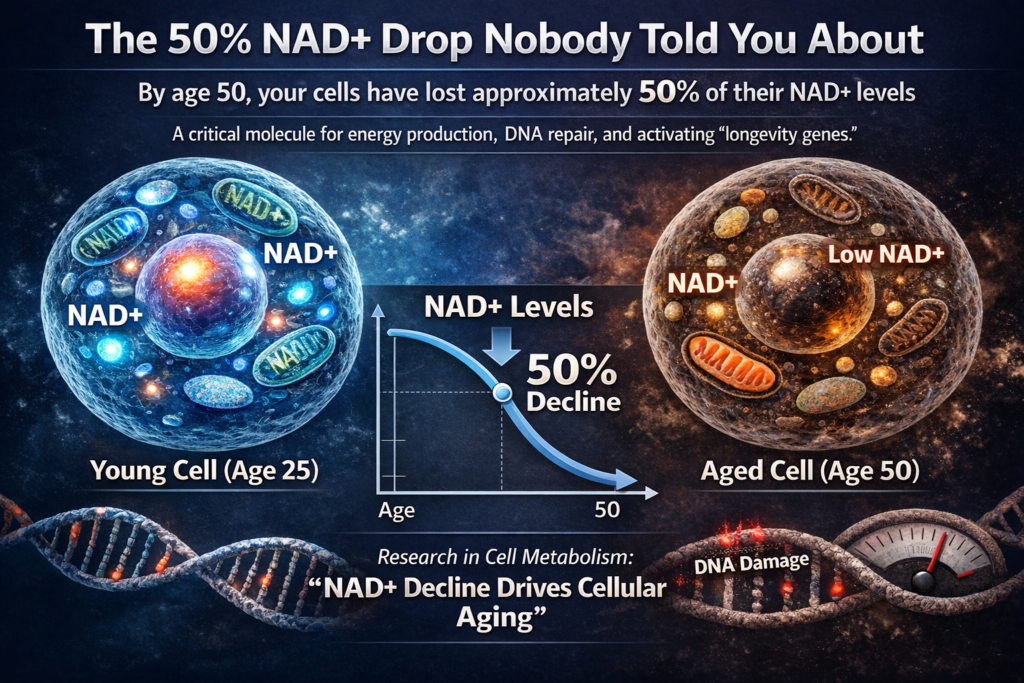
The decline in NAD+ levels with age (approximately 50% reduction by age 50) is considered a primary driver of cellular aging. NAD+ is essential for:
- Sirtuin enzymes (longevity genes that regulate cellular health)
- PARP enzymes (DNA repair)
- Mitochondrial ATP production
- Circadian rhythm regulation
- Neurological function
Recent human studies show NMN and NR supplementation can:
- Increase NAD+ levels by 40-50% within 2-4 weeks
- Improve mitochondrial function and energy production
- Enhance muscle function and endurance
- Support cognitive function and neuroprotection
- Improve insulin sensitivity
- Support cardiovascular health
Resveratrol or Pterostilbene
- Mechanism: Sirtuin activator, antioxidant, anti-inflammatory, mimics caloric restriction benefits
- Hallmarks addressed: Epigenetic alterations, deregulated nutrient sensing, inflammation
- Dosing: 250-500mg pterostilbene or 500-1,000mg resveratrol with fat for absorption
- Evidence level: Moderate (strong animal research, mixed human results, pterostilbene shows better bioavailability)
- Synergy: Works synergistically with NAD+ precursors to activate sirtuins
Quercetin + Fisetin
- Mechanism: Senolytic and senomorphic properties (clear senescent cells), antioxidant, anti-inflammatory
- Hallmarks addressed: Cellular senescence, inflammation, oxidative stress
- Dosing: Quercetin 500-1,000mg daily; Fisetin 100-500mg daily or 1,000-1,500mg for 2 consecutive days monthly
- Evidence level: Moderate (strong preclinical evidence, human trials ongoing)
- Absorption: Take with fat, possibly with piperine to enhance bioavailability
These flavonoids show particular promise in clearing senescent “zombie cells” that accumulate with age and secrete inflammatory factors. The combination may be more effective than either alone and greatly aid in Biological Age Reversal.
The Mitochondrial Optimization Stack
Coenzyme Q10 (Ubiquinol)
- Mechanism: Electron transport chain function, ATP production, antioxidant protection
- Hallmarks addressed: Mitochondrial dysfunction, oxidative stress, cardiovascular health
- Dosing: 100-300mg ubiquinol daily with fat
- Evidence level: Strong (well-researched, particularly for cardiovascular and energy support)
- Age consideration: Ubiquinol (reduced form) is better absorbed than ubiquinone, especially after age 40
PQQ (Pyrroloquinoline Quinone)
- Mechanism: Promotes mitochondrial biogenesis (creation of new mitochondria), antioxidant
- Hallmarks addressed: Mitochondrial dysfunction, oxidative stress, energy production
- Dosing: 10-20mg daily
- Evidence level: Moderate (promising research, particularly for cognitive and energy support)
- Synergy: Works well with CoQ10 to both optimize existing mitochondria and create new ones
Alpha-Lipoic Acid
- Mechanism: Mitochondrial antioxidant, glucose metabolism support, chelation of metals
- Hallmarks addressed: Mitochondrial dysfunction, oxidative stress, metabolic health
- Dosing: 300-600mg R-ALA (R-form preferred) on empty stomach
- Evidence level: Moderate to strong (well-researched for metabolic and neuroprotective effects)
- Timing: Best absorbed on empty stomach, may improve insulin sensitivity
L-Carnitine or Acetyl-L-Carnitine
- Mechanism: Transports fatty acids into mitochondria for energy production, cognitive support
- Hallmarks addressed: Mitochondrial function, energy metabolism, cognitive health
- Dosing: 500-2,000mg ALCAR or L-carnitine daily
- Evidence level: Moderate (strong for specific uses like exercise performance and cognitive support)
- Form consideration: ALCAR crosses blood-brain barrier better for cognitive benefits
The Autophagy and Cellular Cleanup Stack
Spermidine
- Mechanism: Induces autophagy (cellular recycling), supports cardiovascular and cognitive health
- Hallmarks addressed: Disabled macroautophagy, proteostasis, cardiovascular aging
- Dosing: 1-3mg daily with food
- Evidence level: Moderate (strong animal research, human epidemiological data, clinical trials emerging)
- Sources: Can be obtained from wheat germ, but supplementation ensures consistent dosing
Population studies show people with higher dietary spermidine intake have better cardiovascular outcomes and longevity. Spermidine levels decline with age, and supplementation may restore youthful autophagy function.
Urolithin A
- Mechanism: Mitophagy (clearance of damaged mitochondria), enhances mitochondrial function
- Hallmarks addressed: Mitochondrial dysfunction, disabled macroautophagy, muscle health
- Dosing: 250-500mg daily
- Evidence level: Moderate to strong (well-designed human studies showing muscle and mitochondrial benefits)
- Bioavailability: Direct supplementation bypasses gut bacteria conversion variability from pomegranate/berry consumption
Recent clinical trials demonstrate Urolithin A supplementation:
- Improves muscle endurance and strength
- Enhances mitochondrial efficiency
- Supports cellular energy production
- May improve biomarkers of aging
This compound is particularly exciting because not everyone can produce Urolithin A from dietary sources due to gut microbiome variations, making direct supplementation valuable.
Berberine or Metformin Alternatives
- Mechanism: AMPK activation (mimics caloric restriction benefits), glucose metabolism support
- Hallmarks addressed: Deregulated nutrient sensing, metabolic health, inflammation
- Dosing: 500mg berberine 2-3x daily with meals
- Evidence level: Strong for metabolic support (extensive research on glucose and lipid metabolism)
- Caution: May interact with medications; consult healthcare provider
The Longevity Minerals and Trace Elements
Selenium (Selenomethionine)
- Mechanism: Antioxidant enzyme cofactor (glutathione peroxidase), thyroid function, immune support
- Hallmarks addressed: Oxidative stress, immune function, DNA protection
- Dosing: 100-200mcg daily
- Evidence level: Strong (essential trace element with clear roles)
- Balance: Avoid exceeding 400mcg daily long-term
Lithium (Low-Dose Orotate)
- Mechanism: Neuroprotection, mood stabilization, potential longevity benefits, autophagy support
- Hallmarks addressed: Neuroprotection, cellular stress response, mental health
- Dosing: 1-5mg elemental lithium (from lithium orotate)
- Evidence level: Moderate (epidemiological data intriguing, low-dose safety profile good)
- Note: Low-dose lithium orotate is very different from prescription lithium carbonate
Boron
- Mechanism: Bone health, hormone metabolism, vitamin D activation, anti-inflammatory
- Hallmarks addressed: Bone density, hormonal health, inflammation
- Dosing: 3-6mg daily
- Evidence level: Moderate (emerging research on bone and hormonal benefits)
- UK consideration: Soil depletion may make supplementation beneficial
Strategic Stacking Protocols
Rather than taking all compounds simultaneously, consider strategic rotation and timing:
Morning Stack (Energy and Protection)
- NAD+ precursor (NMN or NR)
- B-Complex
- Vitamin D3+K2
- CoQ10/Ubiquinol
- PQQ
- Omega-3s
- Vitamin C
Evening Stack (Recovery and Repair)
- Magnesium (glycinate for sleep support)
- Resveratrol or Pterostilbene
- Spermidine
- Zinc
- Vitamin E
With Meals (Absorption Optimization)
- Fat-soluble vitamins and compounds with fatty meals
- Minerals with food to reduce GI upset
- Berberine with carbohydrate-containing meals
Cycling Protocols
- Fisetin: High-dose 2 days per month
- Some practitioners cycle NAD+ precursors (5 days on, 2 days off)
- Consider seasonal variations (higher vitamin D in winter)
The SOS Essentials Longevity Stack
At SOS Essentials Biological Age Reversal, we’ve formulated a 100% Natural longevity support based on the latest research and bioavailability science such as Natural Nano-technology. Our formulations address multiple health and aging hallmarks simultaneously at the cellular level with ingredients (SOS ADVANCE):

Why SOS Essentials Leads in Longevity and General Blood Health Supplementation:
- Research-Based Formulation: Every ingredient and dosage is based on peer-reviewed research, not marketing trends
- Practitionner Approved: Third-party tested for purity, potency, and absence of contaminants (GMP and ISO 9001 made in the UK CERTIFIED products).
- Optimal Technology: We use the most absorbable forms (Natural Nano-Technology that breaks the particles of all our ingredients into nano meters -as tiny as they can be- making it easy for your cells to absorb the product in full and faster and thus the body feels the benefices rapidly).
- Synergistic Combinations: Ingredients are combined for maximum synergy and minimal interactions
- Transparent Labeling: Full disclosure of all ingredients and dosages—no proprietary blends hiding inadequate amounts
- No Fillers or Additives: 100% Natural ingredients (botanical blends + Essential oils), clean formulations without unnecessary chemicals, fillers, or allergens
Explore the SOS Essentials Longevity Range to find comprehensive formulations that simplify your longevity stack while maximizing effectiveness for Biological Age Reversal.
NAD+ Precursors: The Master Molecule of Youth {#nad-precursors}
Among all longevity interventions, NAD+ (nicotinamide adenine dinucleotide) optimization has emerged as perhaps the most scientifically validated and mechanistically understood approach to cellular age reversal. Understanding NAD+ biology is essential for anyone serious about biological age optimization.
What Is NAD+ and Why Does It Decline?
NAD+ is a coenzyme found in every cell of your body, essential for:
Energy Production
- Critical for the electron transport chain in mitochondria
- Required for converting food into ATP (cellular energy)
- Without adequate NAD+, cellular energy production collapses
DNA Repair
- Activates PARP enzymes that repair DNA damage
- DNA breaks accumulate daily from normal metabolism, radiation, and environmental factors
- PARP enzymes consume NAD+ when repairing DNA
Sirtuin Activation
- Sirtuins are “longevity genes” that regulate cellular health
- All seven sirtuins require NAD+ to function
- Sirtuins control epigenetics, metabolism, inflammation, and stress resistance
Circadian Rhythm Regulation
- NAD+ levels fluctuate throughout the day
- This cycling helps regulate circadian biology
- Disrupted NAD+ rhythms impair sleep and metabolic health
Immune Function
- NAD+ is required for optimal immune cell function
- Declines in NAD+ may contribute to immunosenescence (immune aging)
The NAD+ Decline with Age
Research consistently shows NAD+ levels decline dramatically with aging:
- Age 20-30: 100% (baseline)
- Age 40: Approximately 75% of youthful levels
- Age 50: Approximately 50% of youthful levels
- Age 60: Approximately 40% of youthful levels
- Age 80: Approximately 10-20% of youthful levels
This decline is caused by:
- Increased consumption: CD38 enzyme (which degrades NAD+) increases with age and inflammation
- Decreased production: NAD+ synthesis pathways become less efficient
- Increased PARP activation: Accumulated DNA damage requires more NAD+ for repair
- Senescent cell accumulation: Senescent cells are NAD+ sinks
- Mitochondrial dysfunction: Impaired mitochondria are less efficient at NAD+ utilization
The consequence is a devastating spiral: low NAD+ impairs cellular function, which causes more damage, which requires more NAD+ for repair, further depleting stores.
NAD+ Precursors: Restoring Youthful Levels (Biological Age Reversal Process)
You cannot simply take NAD+ orally—it’s poorly absorbed and rapidly broken down. Instead, you must provide precursor molecules that cells convert into NAD+. The main precursors are:
NMN (Nicotinamide Mononucleotide)
Mechanism: NMN is converted to NAD+ through a single enzymatic step via the enzyme NMNAT (nicotinamide mononucleotide adenylyltransferase). This makes it a highly efficient NAD+ precursor.
Research Evidence:
- Animal studies show dramatic improvements in energy metabolism, insulin sensitivity, mitochondrial function, neurological health, and lifespan
- Human studies demonstrate:
- Increased NAD+ blood levels by 40-50% within 2-4 weeks
- Improved insulin sensitivity in prediabetic individuals
- Enhanced muscle function and aerobic capacity
- Better sleep quality
- Improved cognitive function in some studies
- Cardiovascular benefits
Dosing:
- Research doses: 250-500mg daily for most people
- Some protocols use up to 1,000mg for specific therapeutic goals
- Best taken in the morning on an empty stomach for optimal absorption
- Sublingual forms may offer enhanced bioavailability
Considerations:
- Generally well-tolerated with minimal side effects
- Some people report improved energy within days
- May cause mild flushing in sensitive individuals (harmless, NAD+-related)
- Should be cycled by some practitioners’ recommendations (5 days on, 2 off)
Quality Matters: NMN quality varies enormously. Look for:
- Third-party tested for purity (>99%)
- Stored in cool, dark conditions (NMN degrades with heat/light)
- Manufactured using enzymatic rather than chemical synthesis
- Recent production date (fresh is better)
NR (Nicotinamide Riboside)
Mechanism: NR requires two enzymatic steps to convert to NAD+ (first to NMN, then to NAD+). Despite this, it’s been extensively researched and proven effective.
Research Evidence:
- Human studies show:
- Increased NAD+ levels by 40-60% in blood
- Improved mitochondrial function
- Enhanced neuroprotection
- Cardiovascular benefits
- Anti-inflammatory effects
- Improved insulin sensitivity
- ChromaDex (Niagen) brand has extensive human safety data
Dosing:
- Research doses: 300-500mg daily
- Some protocols use up to 1,000mg
- Can be taken morning or evening
- Food may enhance absorption
Considerations:
- Excellent safety profile with extensive human data
- May cause mild nausea in some people (take with food)
- More stable than NMN at room temperature
- Well-established brand options with quality assurance
Comparing NMN vs NR:
Both are effective NAD+ precursors with slight differences:
| Factor | NMN | NR |
|---|---|---|
| Conversion steps to NAD+ | 1 step | 2 steps |
| Bioavailability | High (especially sublingual) | High (especially with food) |
| Human research | Growing rapidly | More extensive |
| Stability | Requires cool storage | More stable |
| Cost | Varies widely | Premium but consistent |
| Effectiveness | Excellent | Excellent |
The Bottom Line: Both work. Choose based on:
- NMN if you want the theoretically more direct precursor and don’t mind proper storage
- NR if you want more extensive human safety data and better shelf stability
- Try both to see which you respond better to (individual variation exists)
Niacin and Niacinamide (Vitamin B3)
Mechanism: These are alternative NAD+ precursors through the Preiss-Handler pathway (niacin) or salvage pathway (niacinamide).
Considerations:
- Niacin causes flushing in most people due to prostaglandin release (harmless but uncomfortable)
- Niacinamide doesn’t cause flushing but may inhibit sirtuins at high doses
- Both increase NAD+ but may not be as efficient as NMN/NR
- Very inexpensive compared to NMN/NR
- Long safety track record as vitamin B3
Use Case: Best as part of a B-complex for general health rather than primary NAD+ optimization strategy.
Maximizing NAD+ Benefits: The Complete Protocol
NAD+ precursors work best as part of a comprehensive approach:
Combine with Sirtuin Activators
Since NAD+ activates sirtuins, combining NAD+ precursors with sirtuin activators creates synergy:
Resveratrol or Pterostilbene
- Directly activate SIRT1
- Work synergistically with NAD+ for greater effect than either alone
- Research shows the combination amplifies longevity benefits
Fisetin
- Activates sirtuins while also clearing senescent cells
- Multi-target approach to aging
Recommended Protocol:
- NAD+ precursor (NMN or NR): 250-500mg morning
- Pterostilbene: 250mg morning or evening with fat
- OR Resveratrol: 500mg with fat (lower bioavailability than pterostilbene)
Support NAD+ Synthes
Disclaimer; Disclaimer: This blog provides research-based information on biological age reversal. It is not a substitute for professional medical advice. Consult a doctor for your health. Read more blogs like this here.
Here are links of two qualified Practitioners for internal health diagnostics.
| UK South Abigail Silcox Wellness with Abigail Phone no; +44 7880 334346 | UK North Annabel Andrew Flourish Natural Health Phone no; 07881 504165 |
|---|