

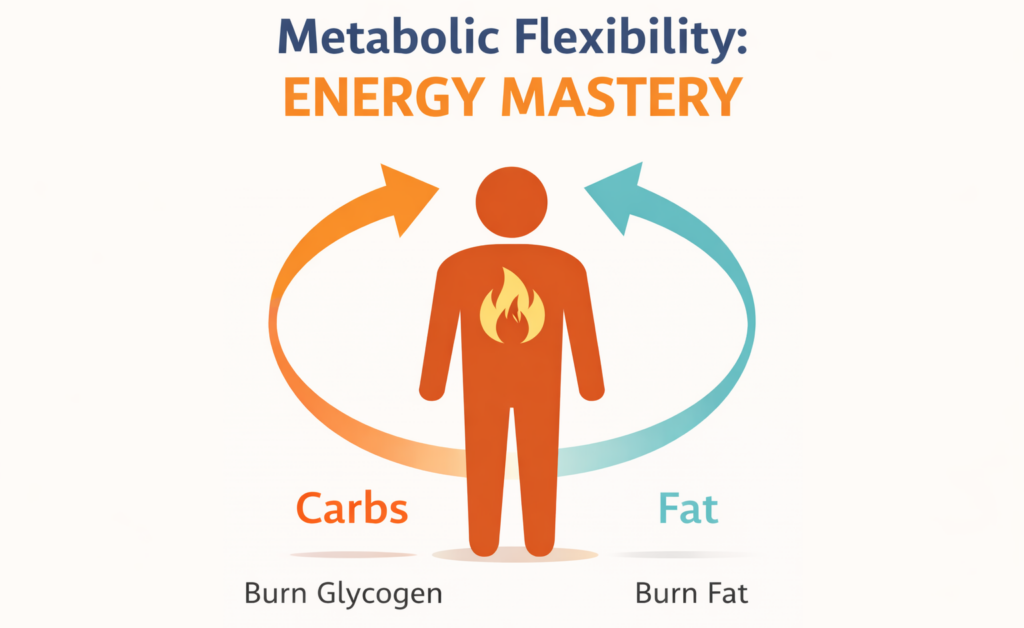
The ability to seamlessly switch between burning fats and carbohydrates for fuel determines far more than weight management. Indeed, metabolic flexibility influences energy levels, cognitive function, athletic performance, disease risk, and even surgical outcomes.
Groundbreaking research from University College London published in Anesthesia & Analgesia reveals that patients with greater fuel-switching capacity experienced fewer surgical complications and hospital stays shortened by an average of four days. Significantly, this landmark study demonstrates that this fundamental biological process impacts every aspect of health—from daily energy to life-threatening medical procedures.
Understanding Your Body’s Fuel-Switching Capacity
Your body’s capacity to seamlessly alternate between different fuel sources based on availability and demand represents optimal cellular function. When this ability is intact, cells can burn glucose during high-carbohydrate intake or intense exercise, then efficiently switch to fat oxidation during fasting or low-carbohydrate periods. Consequently, this metabolic agility signifies healthy cellular function and robust mitochondrial capacity.
The importance of efficient fuel switching cannot be overstated. Without it, your body becomes “metabolically inflexible”—locked into glucose dependence, struggling to access stored fat for energy. This rigidity manifests as energy crashes, constant hunger, difficulty losing weight, poor exercise recovery, and increased disease risk.
Unfortunately, modern lifestyles have created an epidemic of fuel-switching impairment. Constant carbohydrate availability, frequent eating, processed foods, sedentary behavior, and chronic stress all suppress this critical capacity. As a result, we now have a population trapped in glucose dependency, experiencing the consequences of impaired adaptation.
The Science Behind Fuel-Switching Efficiency (Metabolic Flexibility)
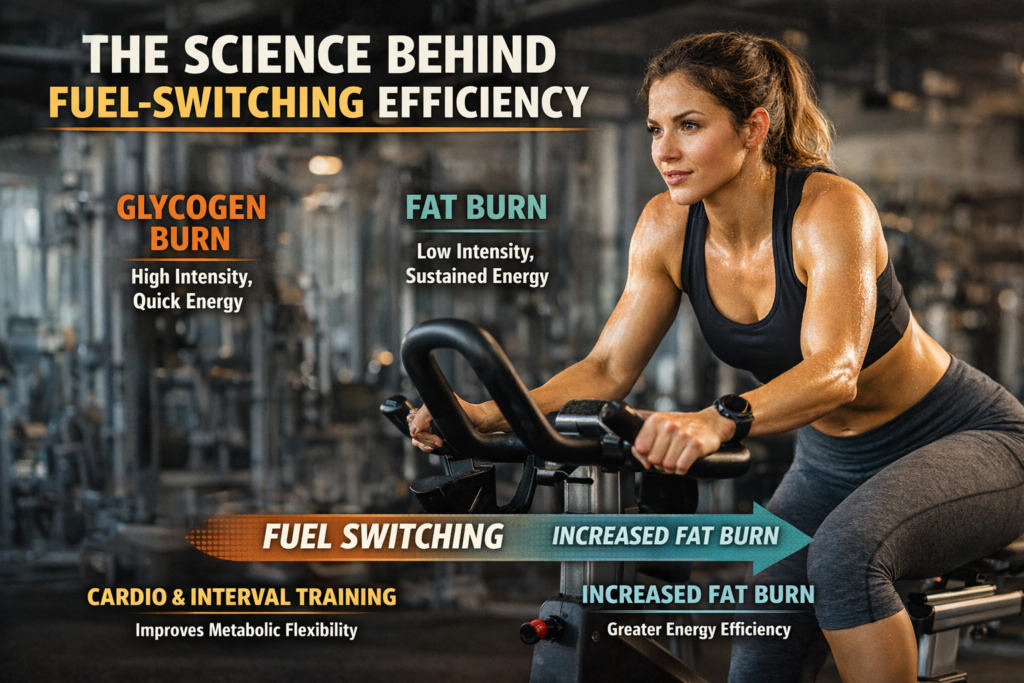
According to research published in Annals of Nutrition & Metabolism, the capacity to switch between energy sources depends primarily on mitochondrial health and insulin sensitivity. Specifically, mitochondria—your cellular power plants—must be capable of efficiently metabolizing both glucose and fatty acids.
When mitochondrial function is compromised by oxidative stress, toxin accumulation, or nutrient deficiencies, fuel adaptation deteriorates. Lead researcher John Whittle from University College London explains that “patients with inflexibility may experience worse outcomes due to impaired immune responses and heightened insulin resistance, resulting in prolonged recovery times.”
Insulin sensitivity plays an equally critical role in metabolic flexibility. When cells respond appropriately to insulin, glucose enters cells efficiently, blood sugar remains stable, and the body can switch to fat burning between meals. In contrast, insulin resistance—the hallmark of poor adaptation—prevents this fuel switching, keeping you trapped in glucose-burning mode.
Studies demonstrate that efficient fuel switching is strongly associated with longevity, reduced disease risk, and optimal body composition. Moreover, individuals with superior adaptation maintain stable energy throughout the day, resist weight gain despite dietary variations, and demonstrate remarkable resilience to metabolic stressors.
Revolutionary Surgical Outcomes Research
Perhaps the most striking recent finding involves surgical recovery. The University College London study analyzed 585 patients undergoing major surgeries between 2012 and 2022, revealing that those with greater fuel adaptability experienced significantly fewer post-operative complications and were discharged from the hospital four days earlier than metabolically inflexible patients.
This connection makes biological sense: surgery creates massive metabolic stress requiring rapid fuel switching. Patients with robust adaptation can efficiently utilize both glucose and fatty acids to fuel healing, maintain immune function, and prevent complications. Conversely, metabolically inflexible patients struggle to meet these energy demands, leading to delayed recovery, increased inflammation, and higher complication rates.
Dr. Pietro Arina, lead researcher, noted that “metabolic conditioning—something potentially achieved by targeted prehabilitation—could be linked to surgical recovery.” Therefore, this research suggests that optimizing fuel-switching capacity before elective surgery could dramatically improve outcomes.
Signs of Impaired Fuel Adaptation
Recognizing metabolic inflexibility is the first step toward restoration. Common indicators include:
Energy Instability: Experiencing energy crashes, particularly between meals or a few hours after waking. In contrast, robust fuel switching maintains steady energy regardless of meal timing.
Constant Hunger: Feeling hungry within two hours of eating suggests glucose dependency and poor adaptation. Conversely, metabolically flexible individuals can comfortably go 4-6 hours between meals.
Exercise Intolerance: Feeling exhausted during or after moderate exercise indicates impaired capacity. Specifically, the body cannot efficiently access fat stores for fuel during physical activity.
Weight Loss Resistance: Inability to lose weight despite caloric restriction often reflects poor fuel switching. Without this capability, the body cannot effectively burn stored fat.
Brain Fog: Cognitive decline between meals signals glucose dependency. On the other hand, a metabolically flexible brain efficiently uses ketones and glucose, maintaining consistent mental clarity.
Poor Fasting Tolerance: Experiencing severe discomfort, irritability, or cognitive impairment when delaying meals indicates inflexibility. Your body has lost the ability to switch to fat burning.
Building Capacity Through Time-Restricted Eating
One of the most effective strategies for enhancing fuel adaptability involves extending the fasting period between dinner and breakfast. Time-restricted eating (typically consuming all meals within an 8-12 hour window) forces your body to practice fuel switching daily.
During the fasting period, glucose stores gradually deplete, requiring a shift to fat metabolism. Regular practice strengthens this pathway, thereby improving your body’s switching efficiency. Start with a 12-hour overnight fast (e.g., dinner at 7 PM, breakfast at 7 AM) and gradually extend to 14-16 hours as capacity improves.
The beauty of time-restricted eating for enhancement is its simplicity. You’re not changing what you eat—just when you eat. This approach trains adaptation without requiring complex dietary manipulations or extreme restrictions.
Cellular Support for Optimal Function and Metabolic Flexibility
While behavioral interventions build capacity, cellular-level support accelerates the process. Mitochondrial dysfunction represents a primary driver of inflexibility. When mitochondria are damaged by toxins, oxidative stress, or nutrient deficiencies, they cannot efficiently process fatty acids, thereby limiting adaptation regardless of dietary practices.
SOS Advance supports optimal function by helping eliminate cellular toxins that impair mitochondrial performance. This deep cellular cleansing creates optimal conditions for restoration. When mitochondria function properly, they can efficiently metabolize both glucose and fats, enabling seamless fuel switching.
For sustained support, SOS Maintain provides ongoing cellular protection against environmental toxins that continuously threaten mitochondrial health. By maintaining cellular cleanliness, you preserve the gains achieved through dietary and lifestyle interventions.
Exercise and Fuel-Switching Enhancement (Metabolic Flexibility)

Strategic exercise powerfully enhances adaptation through multiple mechanisms. High-intensity interval training (HIIT) depletes glycogen stores, thereby forcing metabolic adaptation. Your body learns to rapidly switch between glucose and fat metabolism to meet varying energy demands during intense intervals.
Fasted cardio—moderate-intensity exercise performed before breakfast—specifically trains fat-oxidation pathways. When you exercise in a fasted state, depleted glycogen forces reliance on fat metabolism, strengthening this critical aspect of fuel switching.
Strength training builds capacity by increasing muscle mass, which enhances insulin sensitivity and glucose disposal. More muscle tissue means greater efficiency through improved glucose metabolism and increased mitochondrial density.
The key to exercise-induced improvement is variety. Combining different training modalities—HIIT, steady-state cardio, strength training—provides comprehensive stimulation, building robust fuel-switching capacity across all intensity levels.
Dietary Strategies for Enhanced Adaptation
Certain dietary approaches specifically enhance fuel switching beyond simple time restriction:
Carbohydrate Cycling: Alternating between higher and lower carbohydrate days trains adaptation by forcing regular fuel switching. This practice prevents metabolic adaptation while building robust fuel-flexibility.
Whole Foods Emphasis: Processed foods impair adaptation through inflammatory compounds, excessive omega-6 fats, and blood sugar disruption. In contrast, whole, nutrient-dense foods support the cellular health underlying optimal function.
Adequate Protein: Protein intake of 0.8-1.2g per pound of body weight supports capacity by preserving muscle mass during fat adaptation and providing amino acids for mitochondrial repair.
Healthy Fats: Including quality fats from avocados, nuts, olive oil, and wild fish provides the raw materials for efficient fat metabolism central to fuel switching.
Micronutrient Density: B vitamins, magnesium, CoQ10, and other micronutrients are essential for mitochondrial function. Nutrient deficiencies directly impair fuel-switching capacity.
Insulin Sensitivity and Fuel Adaptation

The relationship between insulin sensitivity and fuel switching is bidirectional and self-reinforcing. Poor insulin sensitivity prevents adaptation by keeping insulin levels chronically elevated, which blocks fat metabolism. Conversely, impaired fuel switching worsens insulin resistance through mitochondrial dysfunction and inflammation.
Improving insulin sensitivity enhances capacity through several mechanisms:
- Lower baseline insulin allows easier transition to fat burning
- Enhanced glucose disposal prevents prolonged elevation that blocks fat metabolism
- Improved mitochondrial function supports both glucose and fat oxidation
- Reduced inflammation eliminates a key driver of both insulin resistance and metabolic inflexibility
Strategies that improve insulin sensitivity—time-restricted eating, exercise, stress management, toxin elimination—simultaneously enhance fuel adaptation, thereby creating a positive feedback loop of metabolic improvement.
Stress, Cortisol, and Fuel-Switching Capacity
Chronic stress represents one of the most overlooked threats to fuel adaptation which also hs an impact on Metabolic Flexibility. Elevated cortisol promotes glucose production while suppressing fat oxidation, essentially locking you into glucose metabolism. This stress-induced inflexibility explains why chronically stressed individuals struggle with weight management and energy instability despite appropriate diet and exercise.
Cortisol also damages mitochondria over time, directly impairing the capacity that depends on healthy mitochondrial function. The combination of acute inflexibility from elevated cortisol plus chronic mitochondrial damage creates severe metabolic rigidity resistant to dietary interventions alone.
Protecting fuel-switching ability requires stress management through:
- Daily stress-reduction practices (meditation, breathwork, nature exposure)
- Adequate sleep (7-9 hours) for cortisol normalization
- Strategic exercise that builds stress resilience without overtraining
- Cellular support to repair cortisol-induced mitochondrial damage
SOS OnCare contains adaptogenic and anti-inflammatory compounds that help modulate the stress response affecting fuel switching. By reducing systemic inflammation and supporting cellular resilience, it creates conditions where adaptation can be restored despite unavoidable life stressors.
Sleep and Cellular Restoration
Quality sleep is non-negotiable for optimal fuel adaptation. During sleep, your body performs critical functions including:
- Mitochondrial repair and biogenesis (creating new mitochondria)
- Insulin sensitivity restoration
- Cortisol normalization
- Growth hormone secretion that promotes fat metabolism
- Cellular detoxification that protects fuel-switching capacity
Sleep deprivation devastates fuel adaptation within days. Studies show that even a single night of poor sleep significantly impairs glucose metabolism and insulin sensitivity—key components of efficient fuel switching. Chronic sleep deficiency creates severe inflexibility resistant to dietary and exercise interventions.
Prioritizing sleep quality enhances capacity through:
- Consistent sleep schedule supporting circadian rhythm alignment
- Cool, dark sleeping environment optimizing recovery
- Avoiding late-night eating to prevent sleep-disrupting blood sugar fluctuations
- Managing stress to prevent cortisol-related sleep disturbance
Measuring Your Progress
Unlike abstract health concepts, fuel-switching capacity can be objectively measured through various methods:
Fasting Glucose and Insulin: Low fasting glucose (70-85 mg/dL) with low fasting insulin (<5 μIU/mL) indicates excellent adaptation and insulin sensitivity.
HbA1c: This 3-month average blood sugar marker should be <5.4% for optimal function. Higher levels suggest glucose metabolism dysfunction.
Continuous Glucose Monitoring: CGM devices reveal real-time glucose stability—a direct measure of adaptation. Minimal glucose variability indicates robust fuel switching.
Ketone Levels: Ability to generate ketones during fasting demonstrates fuel adaptation. Blood ketones of 0.5-1.0 mmol/L after 14-16 hour fast indicates good fat-adaptation.
Respiratory Exchange Ratio: Advanced metabolic testing measures the ratio of CO2 produced to O2 consumed, directly revealing fuel utilization and switching capacity.
Regular monitoring allows you to track improvements, identify what interventions work best for your unique physiology, and maintain motivation through objective progress measurement.
Practical Implementation: Your Optimization Protocol (Metabolic Flexibility)
Building robust fuel-switching capacity requires a comprehensive approach addressing multiple factors simultaneously:
Phase 1 (Weeks 1-4): Foundation Building
- Implement 12-hour overnight fast
- Eliminate processed foods and refined sugars
- Begin cellular detoxification with SOS Advance
- Add 3 weekly exercise sessions combining cardio and strength training
Phase 2 (Weeks 5-8): Metabolic Training
- Extend fasting window to 14-16 hours
- Incorporate weekly 24-hour fasts
- Add fasted morning walks
- Transition to SOS Maintain for ongoing support
- Implement carbohydrate cycling (higher carbs on training days, lower on rest days)
Phase 3 (Weeks 9+): Optimization Mastery
- Maintain 14-16 hour daily fasting window
- Practice intuitive eating based on hunger (not clock)
- Continue varied exercise programming
- Monitor metrics (fasting glucose, energy stability, body composition)
- Sustain cellular support for long-term health
Conclusion: Reclaiming Your Fuel-Switching Power
Metabolic flexibility represents the foundation of optimal health, sustainable energy, and disease prevention. In a world designed to create inflexibility through constant food availability, processed ingredients, and sedentary lifestyles, intentionally building robust fuel-switching capacity is both revolutionary and essential.
The remarkable aspect is its accessibility. You don’t need expensive testing, exotic supplements, or extreme protocols. Through strategic eating patterns, regular movement, stress management, quality sleep, and cellular-level support, you can dramatically enhance fuel adaptation within weeks.
Whether you’re seeking effortless weight management, stable energy, improved athletic performance, better surgical outcomes, or simply want to optimize healthspan and longevity, efficient fuel switching provides the biological foundation for success. Your cells know how to switch fuels efficiently—they simply need the right conditions to remember this innate capability.
The question isn’t whether fuel-switching capacity matters—extensive research confirms its critical importance. The question is: when will you begin cultivating the adaptation that unlocks your full health potential?
Continue your wellness journey with more evidence-based insights at the SOS Essentials blog, featuring weekly articles on natural health optimization, cellular wellness, and holistic approaches to vibrant living.
Disclaimer: This information is for educational purposes only and is not intended to diagnose, treat, cure, or prevent any disease. Always consult with a qualified healthcare professional before making changes to your health regimen.